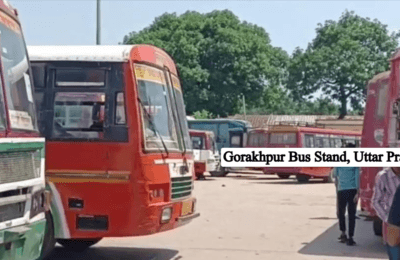
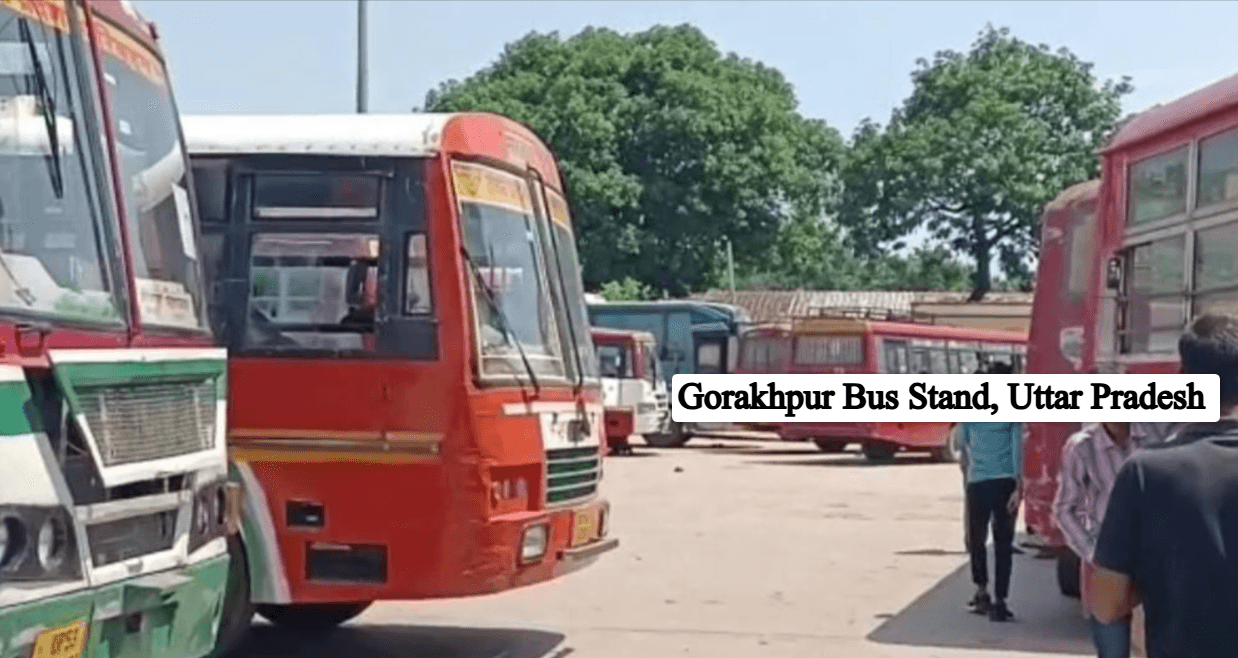
Gorakhpur Bus Stand or bus terminal is the primary road transport hub for the city, operated by the Uttar Pradesh State Road Transport Corporation (UPSRTC). Located right next to the Gorakhpur Junction railway station, it serves as the gateway for road travel across eastern Uttar Pradesh, into neighboring states, and toward the Nepal border — Gorakhpur being the main Indian terminus for travelers heading to Kushinagar, Kapilvastu, and Lumbini in Nepal.
Details Table
| Detail | Information |
|---|---|
| Name | Gorakhpur Main Bus Stand (Gorakhpur Bus Station) |
| Operator | Uttar Pradesh State Road Transport Corporation (UPSRTC) |
| Location | Near Gorakhpur Junction Railway Station, Gorakhpur, Uttar Pradesh |
| Operating Hours | Services run from as early as 3:00 AM until late night |
| UPSRTC Fleet Size | Over 12,400 buses statewide (some sources cite ~9,400) |
| UPSRTC HQ | Tehri Kothi, MG Marg, Lucknow |
| Key Border Route | Gorakhpur–Sonauli (Nepal border), roughly 3 hours |
| Additional Boarding Points | Nausad Chauraha, Transport Nagar, and other private-operator stops around the city |
Map Location
- The main UPSRTC bus stand is centrally located, right next to Gorakhpur Junction railway station, making bus-to-train transfers easy
- Many private operators use additional common boarding points around the city — Nausad Chauraha (on Varanasi/Lucknow Road) is one of the most frequently listed pickup points alongside the main stand
Passenger Facilities
Per UPSRTC’s general network standards (typical of its bus stations, though exact on-site amenities should be confirmed locally):
- Restrooms, toilets, and drinking water facilities
- Booking offices/ticket counters and enquiry counters
- Waiting areas with seats and benches
- Timetables and chart displays
- Public address systems
- Computerised reservation facility
- Canteens and small vending stalls
- Note: UPSRTC’s own documentation acknowledges that facility quality varies significantly across its stations — some stands fall well short of standards despite the corporation’s stated amenities list, so it’s worth verifying current conditions before travel
Bus Depot and Operations Area
- Operated by UPSRTC, established in 1947 as UP Government Roadways and renamed in 1972 under the Road Transport Act of 1950
- UPSRTC runs one of the largest state bus fleets in North India, with routes spanning Uttar Pradesh, Uttarakhand, Delhi, Bihar, Rajasthan, Punjab, Himachal Pradesh, Haryana, Jammu & Kashmir, Madhya Pradesh, and Nepal
- Gorakhpur functions as a key regional depot given its location in eastern UP, close to both Bihar and the Nepal border
- A mix of UPSRTC government buses and numerous private operators (including AC/Volvo sleeper services) serve the city, with private operators often using separate boarding points around town
Full Route Map and Major Destinations
- Within Uttar Pradesh: Lucknow, Varanasi, Kanpur, Azamgarh, Ayodhya, Basti, Kushinagar (Kasia), Faizabad
- Nepal Border: Sonauli — the busiest crossing point to Nepal, roughly 3 hours away, with buses running from early morning (3 AM) until late night
- Interstate: Delhi, Patna, Muzaffarpur, Darbhanga, Motihari, Chhapra (Bihar), Gopalganj, Noida, Jaipur, Agra, Mathura, Bharatpur, Ajmer, Bikaner, Sikar, Gurgaon
- International: Kathmandu (Nepal) — connecting services available
Simplified Route Direction Map
| Direction | Key Destinations |
|---|---|
| East/Nepal Border | Sonauli, Kathmandu (Nepal) |
| North/Northeast (Buddhist Circuit) | Kushinagar, Kapilvastu, Lumbini (via Sonauli) |
| West | Lucknow, Kanpur, Delhi, Agra, Jaipur |
| South/Southeast | Varanasi, Azamgarh, Ayodhya |
| East (Bihar) | Patna, Muzaffarpur, Darbhanga, Motihari, Gopalganj |
Connectivity from Chennai and Other Major Cities
- From Chennai: Direct bus travel is impractical given the distance (well over 1,500 km); the standard route is by train or flight from Chennai to Delhi, Lucknow, or Varanasi, followed by a connecting bus or train to Gorakhpur
- By Air: Gorakhpur has its own airport (Air Force Station-adjacent civil terminal), roughly 8 km from the railway station, with daily flights to Delhi and Kolkata — the most practical way to connect from distant cities like Chennai
- By Rail: Gorakhpur Junction is a major railway hub with extensive connectivity across India, including to southern cities, and sits right next to the main bus stand for easy interchange
- Within the region: Frequent UPSRTC and private bus services connect Gorakhpur to Lucknow, Varanasi, and Kanpur, which in turn have better direct connectivity to cities further south
Why Gorakhpur Bus Stand Matters
- It is the key terminus for the Nepal border crossing at Sonauli, making it vital for pilgrims and travelers heading to Lumbini (Buddha’s birthplace) and other Nepal destinations
- It anchors the Buddhist pilgrimage circuit, given Gorakhpur’s proximity to Kushinagar (where Buddha died) and Kapilvastu
- Its location next to Gorakhpur Junction railway station makes it a crucial interchange point for travelers combining rail and road journeys
- As part of UPSRTC’s extensive network, it connects eastern Uttar Pradesh to Delhi, Bihar, Rajasthan, and beyond, serving one of India’s most densely populated regions
- Early morning to late-night service (starting as early as 3 AM) reflects the sheer volume of cross-border and long-distance travel passing through the city
Travel Tips for Passengers
- Confirm your boarding point — Gorakhpur has multiple pickup locations besides the main stand, especially Nausad Chauraha, so double-check your ticket.
- Book Sonauli-bound buses early in the day if you’re crossing into Nepal, since services run from 3 AM and are frequent but can fill up during peak pilgrimage season.
- Use the rail-bus interchange — since the main bus stand is next to Gorakhpur Junction, plan your arrival/departure accordingly if combining train and bus travel.
- Check current facility conditions locally, as UPSRTC’s own materials note inconsistent upkeep across stations.
- Consider flying into Gorakhpur from distant cities (it has direct flights to Delhi and Kolkata) rather than attempting a long-distance direct bus journey.
- Carry a printed/digital ticket for private AC/sleeper operators, and confirm the exact pickup point given the many similarly named stops around Nausad Chauraha.
FAQ
Q: Where is Gorakhpur’s main bus stand?
A: Centrally located, right next to Gorakhpur Junction railway station.
Q: Who operates it?
A: The Uttar Pradesh State Road Transport Corporation (UPSRTC), along with numerous private operators.
Q: What are the operating hours?
A: Buses run from as early as 3:00 AM until late at night, particularly on the busy Sonauli route.
Q: How do I reach the Nepal border from here?
A: Frequent buses run from Gorakhpur to Sonauli, the main border crossing, taking roughly 3 hours.
Q: Is it connected to Gorakhpur’s airport?
A: The airport is about 8 km from the railway/bus stand area, with daily flights to Delhi and Kolkata.
Q: Which cities can I reach directly?
A: Lucknow, Varanasi, Kanpur, Delhi, Patna, Ayodhya, Azamgarh, and destinations in Bihar and Rajasthan, among others.
Q: Is there a direct bus from Chennai?
A: No — given the distance, most travelers fly or take a train to Delhi, Lucknow, or Varanasi and then connect onward to Gorakhpur.
Q: What’s the significance for Buddhist pilgrims?
A: Gorakhpur is the main terminus for reaching Kushinagar, Kapilvastu, and (via Sonauli) Lumbini in Nepal — key sites on the Buddhist circuit.