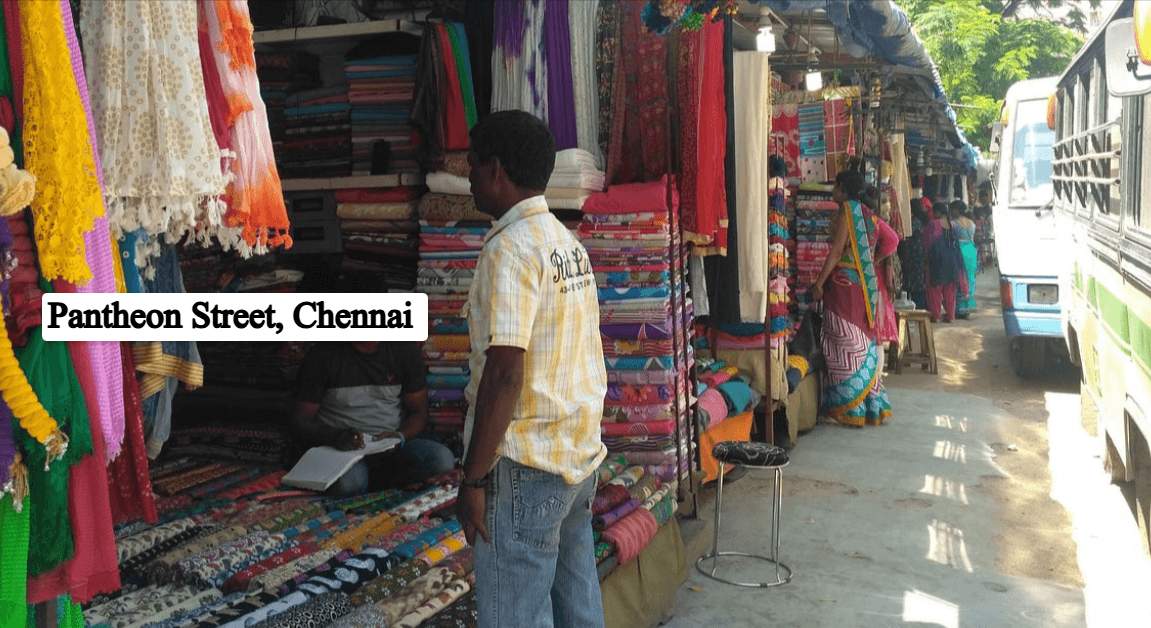
Pantheon Road or Pantheon Street takes its name from The Pantheon, an 18th-century “Public Assembly Rooms” complex that once dominated Egmore. The story goes back to August 1778, when the Governor of Madras granted 43 acres of land — stretching from what’s now Casa Major Road to Police Commissioner’s Office Road — to civil servant and contractor Hall Plumer, who built a mansion on the site. By 1789, the building and grounds had been taken over as Public/Assembly Rooms and formally designated “The Pantheon,” with the property officially acquired from Plumer in 1793 and handed to a committee of 24 that regulated public entertainment in the city.
In 1821, the committee sold the main house and central garden to E. S. Moorat, an Armenian merchant, who sold it back to the government in 1830. The government first used the buildings as the Collector’s “Cutcherry” (office), and later as the site for the Central Museum, with major additions constructed between 1864 and 1890. Though the original Pantheon building itself no longer survives, the road that served it still carries its name — and today the site houses one of the most architecturally diverse compounds in the city, blending Grecian, Indo-Saracenic, Gothic, neo-Byzantine, Rajput, Mughal, and Dravidian styles.
Pantheon Road is one of Egmore’s oldest principal roads, part of a network — alongside Marshall’s Road and Casa Major Road — that developed in the late 18th and 19th centuries as Egmore transformed from open fields and garden houses into an administrative and institutional quarter of colonial Madras.
Pantheon Street – Detailed Guide
| Detail | Information |
|---|---|
| Name | Pantheon Road (also referred to as Pantheon Street) |
| Location | Egmore, Chennai, Tamil Nadu |
| Named After | The Pantheon, an 18th-century public assembly complex |
| Land Grant Year | 1778 (to Hall Plumer) |
| Key Institutions | Government Museum, Connemara Public Library, National Art Gallery, Tamil Nadu Police Museum |
| Museum Established | 1851 (Government Museum) |
| Museum Visitors | Over 602,000 (2018) |
| Shopping Stretch | Cotton Street (a section of Pantheon Road), Alsa Mall, Fountain Plaza |
| Nearby Transit | Chennai Egmore Railway Station, Egmore Metro Station |
Location
- Pantheon Road runs through Egmore, one of Chennai’s oldest colonial-era neighbourhoods, which itself dates back to the 11th century as a Chola-era administrative headquarters
- The road is anchored by the Government Museum Complex (also called the Pantheon Complex), which also houses the Connemara Public Library and the National Art Gallery
- The Tamil Nadu Police Museum sits at 483 Pantheon Road
Connectivity
- By Rail: Chennai Egmore Railway Station is right in the neighbourhood, making it one of the easiest colonial-era quarters of Chennai to reach
- By Metro: Egmore Metro Station serves the area directly
- By Auto/Cab: Widely available for reaching specific attractions along the road or navigating the surrounding streets
- On Foot: Egmore’s lively streets, including Pantheon Road, are walkable once you’re in the neighbourhood, and it’s a short drive from George Town and Triplicane
Why Visit Pantheon Street?
- Rich colonial-era heritage — few streets in Chennai carry as layered a history, tracing back to an 18th-century public assembly complex
- Museum cluster — the Government Museum (one of India’s oldest and largest, established 1851), the Connemara Public Library, the National Art Gallery, and the Tamil Nadu Police Museum are all within the same complex or nearby
- Architectural variety — the Pantheon Complex is often cited as having the greatest variety of architectural styles within a single compound in the city
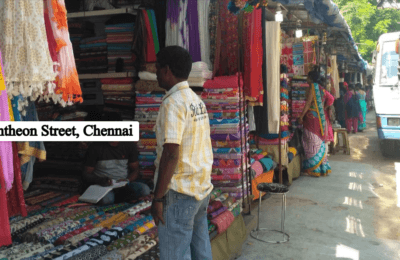
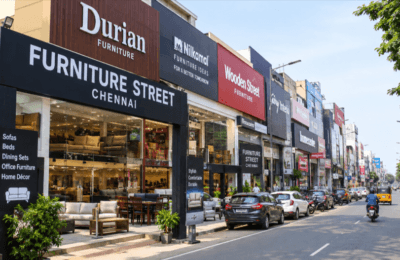
- Shopping on Cotton Street — this section of Pantheon Road is a go-to spot for colorful fabrics and sarees
- A complete neighbourhood experience — combine the road with nearby St. Andrew’s Church, the Ranganathar Temple, and Egmore’s other colonial landmarks for a full heritage walk
Route
- A typical visit starts at or near the Government Museum Complex, exploring its galleries on anthropology, architecture, art, and botany of South India, plus the on-site National Art Gallery and its Ravi Varma paintings
- From there, continue to the Connemara Public Library, a National Library since 1955, known for its colonial-era reading room
- Walk along Cotton Street (part of Pantheon Road) for fabric and saree shopping
- Nearby stops worth combining into the same outing include Alsa Mall and Fountain Plaza for accessories, footwear, and jewelry, plus St. Andrew’s Church (built 1821) a short distance away
Facilities and Amenities
- Museum facilities at the Government Museum Complex, including the 600-capacity Museum Theatre
- The Connemara Public Library offers a reading room and archival collections
- Cotton Street’s fabric and sari shops, alongside nearby Alsa Mall and Fountain Plaza for general shopping (accessories, footwear, jewelry, trinkets)
- Food stalls in the area serve typical Indian snacks like omelette sandwiches and jalebi
- The neighbourhood is generally well served by autos, cabs, and public transit given its central, historic location
FAQ
Q: Why is it called Pantheon Road/Street?
A: It’s named after The Pantheon, an 18th-century public assembly rooms complex that once stood on the site now occupied by the Government Museum Complex.
Q: What can I see there?
A: The Government Museum, Connemara Public Library, National Art Gallery, Tamil Nadu Police Museum, and Cotton Street’s fabric shops.
Q: When was the Government Museum established?
A: 1851, making it one of the oldest museums in India.
Q: What is Cotton Street?
A: A section of Pantheon Road known for shopping — particularly colorful fabrics and sarees.
Q: How do I get there?
A: Chennai Egmore Railway Station and Egmore Metro Station both serve the area directly.
Q: Is the original Pantheon building still standing?
A: No, the original 18th-century Pantheon structure no longer exists, though the road retains its name and the site now hosts the Government Museum Complex.
Q: What else is nearby?
A: St. Andrew’s Church, the Ranganathar Temple, Alsa Mall, and Fountain Plaza are all within easy reach.
Q: Is it suitable for a half-day heritage walk?
A: Yes — combining the museum complex, library, Cotton Street shopping, and nearby churches makes for a solid half-day itinerary.