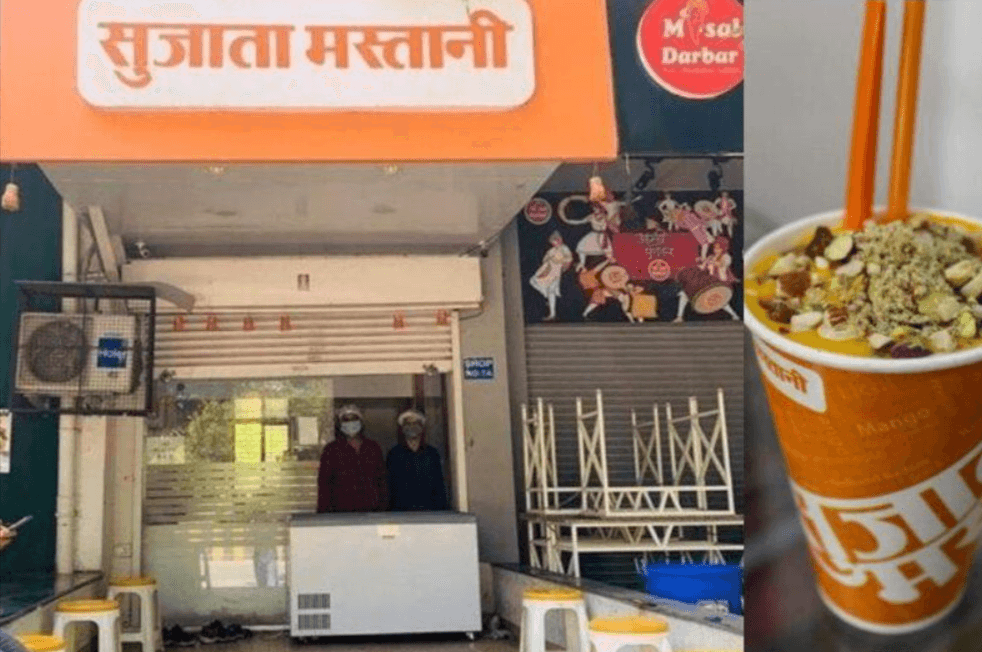
If you’re thinking of opening a dessert and indulgence outlet in India specifically based on the enduring and trusted company, Sujata Mastani — the brand from Pune that is famous for its distinctive mastani shakes (milkshake with ice cream dessert) and other snacks -is a fascinating franchise opportunity. Here’s a comprehensive overview of the way franchises work with estimated investment/costs, the expected ROI, who’s eligible and the steps-by-step procedure to apply that combines reliable franchise-listing sources and practical tips for anyone who wants to become an entrepreneur.
Why Consider a Sujata Mastani Franchise?
- The brand has a strong regional recognition (especially in Maharashtra and Pune) for its special Mastani drink/dessert, and has since grown to franchise units.
- In comparison to the majority of large QSR (Quick Service Restaurant) brands, it provides an incredibly affordable entry point (in numerous sources) which could make it more accessible to new entrepreneurs.
- The product category (desserts/ice-cream/mastani) tends to attract younger demographics, treat purchases, evening footfall in high-streets, malls, college zones — offering good footfall opportunities.
- With a smaller size store (100-300 sq.ft stated) and a menu that is simpler (dessert/ice-cream the main focus, not a full kitchen) the operations are simpler than dine-in restaurants that offer full service.
However, as with everything else success is contingent on the location, recognizing the peak times (evening weekends, evenings) and a streamlined cost control and ensuring high standards for the brand.
Franchise Model: What is it? does it work
Here’s how to structure the Sujata Mastani franchise model usually designed:
- The franchisor (Sujata Mastani brand) provides: brand name and trademark, signature menu items (mastani variants, ice-cream/falooda/dessert line), training in product preparation, basic operations manual, and some support for branding/marketing.
- Franchisee provides: The franchisee offers the retail area (lease/own) that is of a suitable dimensions and footfall, as well as fit-out along with interior (depending on the layout) as well as staff to service and manage working capital, and day-to-day business operations (inventory staff, staff, support for customers).
- Commercial terminology: There is typically an one-time franchise cost plus the infrastructure or setup investment and possibly a fee for royalty, or revenue share clause (some sources suggest a 5 percent royalty). One example mentions a royalty of around 5 percent on sales.
- Size of the store The size of the store is a matter of opinion. Many sources suggest between 100 and 300 sq.ft as the required space for a store.
- Format: Due to the size and range of products some outlets could be kiosks/quick-service or dessert counters instead of full-sit-down restaurants. This makes fitting-out and staffing requirements more manageable.
cost & investment: How much must plan for
Here are some realistic investment ranges that are based on data published; Use these to model -your actual costs will vary greatly based on your where you live (Tier-1 city vs Tier-2) leasing, rental, the quality of the interior, as well as the local cost of raw materials and labour.
Cost range typical
- According to a source according to one source: The total investment between Rs6 and 11 lakh (for smaller formats) including franchise fee and installation.
- Another listing mentions investments of between Rs10 and 15 lakh (in some instances) for specific models.
- A bit higher the investment ranges as ranging from between Rs15 lakh and Rs30 lakh (for larger units/sizes) however this could be applicable to premium locations or larger size.
The breakdown of the cost component
- Franchising Fee Fee for HTML0 Franchise: 1 lakh (as as reported) for a single model.
- Infrastructure / Setup Interiors could range from Rs5 lakh to 10 lakhs or more based on the location and the format.
- Open Inventory / Working Capital Fit-out Costs for additional equipment (freezers and display counters) and initial inventory (ice-cream mastani base) as well as furniture, signage (if there is any).
- Rental Deposit for Fit-out / Lease It is important to budget for rental costs (depending on the location and city) and, if possible, deposits or rentals in advance.
- royalty / ongoing costs Certain sources offer royalty of 5% of revenue to the company.
Example of a cost summary
- Franchise fee: ~Rs1,00,000
- Setup/infrastructure: ~Rs5,00,000-Rs10,00,000
- Working capital/rental/security/other: ~Rs1,00,000-Rs3,00,000 (varies)
- Total: 6 to 11 lakh (for smaller 100-300 sq.ft store in smaller towns or a modest high-street).For more space/better location budget, you could consider a price of Rs12-15 lakh or higher.
Storage size considerations
- Minimum area: ~100 sq.ft quoted; upper model 300 sq.ft.
- The ideal format: kiosks with high footfall Food courts and semi-open counters within malls, near office/college clusters.
- Since the area is less to full-service restaurants, cost of rent and operating expenses are less — which is an advantage.
Expected ROI & Breakeven
- The listing of franchises shows an ROI (breakeven) that ranges from 0.5 up to one year (i.e. between 6 and 12 months) in ideal circumstances.
- A profit margin example (from the estimation) illustrates monthly sales of Rs3,00,000. Cost of ice-creams and royalty Rs1,80,000 rent Rs40,000, other expenses of Rs30,000 net profit = Rs40,000more than margin ~13.33 percentage. If sales increase to Rs4,00,000. This margin could increase to 20 percent (~Rs80,000/month) when located in a suitable place.
- The most important factors for ROI are footfall locations (near colleges or offices) as well as costs of overhead (rent and utilities and staffing) Brand support, along with seasonal promotions. Noting that ice cream and dessert businesses may have a seasonal impact (higher in the summer months) however strong brands can reduce the impact of seasonality.
Practical perspective
- If you put up in the amount of Rs 8 lakh and make a an annual net profit of Rs40,000 in the first year, you could be able to break even after 20 months. If you have a better location or greater sales, you could make it to break even within 12-18 months (as as per the claim of the company).
- After break-even, profit can rise when you increase the range of products, increase the number of regular customers, improve cost efficiency and increase average value of transactions.
- However, you need to prepare for slower start-up months (setup and ramp up for marketing) and perhaps consider local promotions.
Eligibility Criteria & What the Brand Looks For
To be eligible to be an Sujata Mastani franchise, you must typically meet the following requirements:
- Age: The brand states the minimum age of 21 years.
- Ability to finance: To pay the cost of investment and working capital for the duration of time until the business is stable.
- A suitable site or space: having the ability to secure a space between 100 and 300 sq.ft (or more in accordance with the format) in a high-footfall zone (mall or high-street close to colleges/offices).
- Experience in business: Not necessarily needed (many lists say experience in business is can be added) but it can be helpful.
- Willingness to adhere to brand guidelines Training, operations personnel, menu adherence and guidelines for brand.
- Legal conformity: GST registration, FSSAI (food business license) lease agreement licences for trade as per local rules. Certain listings specifically refer to the list of documents.
Steps to Apply: Your Roadmap
Here’s a step-bystep procedure that you can follow to submit your application for an Sujata Mastani franchise and launch:
- Self-assessment & Budgeting
- Calculate your capacity to invest (Rs6-15 lakhs range).
- Choose your preferred city or town (Tier-1 Tier-2) and the type of location you want to target (mall street, food court, high-street, close to colleges).
- Calculate the cost of leasing or renting in the location you prefer, then aim for the number of people who walk through your door and also consider the presence of competitors.
- Find out more about the brand and get in touch
- Visit the official website of the brand (if there is one) or other trusted franchise listing sites for more information.
- Complete the franchise inquiry form (many websites for listing have links directly to “Apply Franchise” or “Enquire now”) or get in touch with the franchise’s development department. For instance, the franchise listing allow you to fill out an application and then get an appointment with a “franchise specialist”.
- Location & Proposal Submission
- Find a for potential site(s) Find images, footage, lease/lease hold information, approximate rent, size.
- Send a site proposal together with your company profile (investment capacity, format, previous experiences).
- The brand will analyze the site’s potential including footfall, visibility, rent terms, competition.
- Agreement & Commercial Terms
- If you are approved after which the brand will send to you an franchise agreement that includes the fees for franchises, royalties/percentage sales, support/services offered by the brand, period (often two years per the listing)
- Make sure to negotiate with care: the exclusivity (can other units operate close by? ) territorial rights, renewal costs the termination clause, obligation to train and support.
- Store Setup & Launch
- Rent or buy your premises and complete fitting-out (display counters and signage, décor equipment) according to the specifications of the brand.
- Train and hire staff. The brand must provide training on production, preparation hygiene, and service. Training is listed on the website.
- Initial inventory order, equipment (freezers mixers counters) as well as signage and a shopfront.
- Launch marketing campaigns: local awareness programs and social media, as well as collaborations (college and youth events) Maybe a tie-up with food delivery.
- Operate & Grow
- Review daily operations, including sales and footfall, average transaction value and stock turnover, as well as staff effectiveness.
- Make sure you are selling up (premium mastani varieties Add-ons, premium mastani variants) and cross-selling (falooda Ice-cream, frozen yogurt variants) and retention of customers (loyalty).
- After stabilisation, try to reduce costs (rent and utilities, as well as personnel) and think about expansion to several units.
Practical Tips & Things to Watch Out
Helpful Tips:
- The location is important Location is crucial: A an excellent product and a strong brand can’t make up for low footfall or low visibility. Be sure to stay in the vicinity of malls, colleges and busy streets where young people socialize.
- Size of footprint: Because the model only needs 100-300 sq.ft You can work for smaller spaces which is beneficial in Tier-2 cities.
- Premium Upsell: Mastani varieties that include dry fruits, mango chocolate, etc. could fetch larger ticket sizes.
- The strategy for the season: Although desserts/ice cream tend to be more popular in warmer weather outlets can lessen seasonal risks by offering variations throughout the year as well as tie-ups (evening snacks and cold shakes).
- Effective staffing and cost control By using a smaller size make overheads less (2-3 staff members at the beginning) and reduce the waste of perishables.
- Marketing and loyalty: Being a brand of desserts, your impulse purchases are important the presence on social media and appeal to youth, a striking appearance in stores can all help.
Red Flags / Things to Check:
- If the cost of rental is too high in comparison to sales you expect to make -make an estimate of monthly rent as the largest fixed expense.
- Hidden costs: Determine what an additional “mandatory purchases” from the franchisor (equipment and signage, uniforms) that are not part of the your initial investment.
- Clarity of the structure of royalty: Find out precisely what percentage or fixed amount you be paying monthly. Some sources indicate 5 percent.
- Exclusivity/territory rights: Check whether other units may be allowed very close, which could cannibalise business.
- Consistency of branding and support Reviews of franchisees (on forums) indicate inconsistencies between outlets. For instance, one Reddit thread highlighted the differences in quality among outlets.
- Actual proof of performance: Ask the franchisor for a samples of P&L or speak to current franchisees (if they are) in your town or in your region.
Final Thoughts
If you’re looking for an moderately-priced investment in a Food franchise opportunity in India, Sujata Mastani offers an appealing proposition, with small size, an established brand name in the region, and a good margins. Based on listings that have been published it is possible to invest in the range of Rs6 lakh to Rs11 lakh for the smaller size and expect to break even after six to 12 months under favorable conditions. If you are in a favorable location and after stabilisation, your monthly earnings can increase significantly.
Remember that every successful franchise requires three key elements working in tandem -the the ideal place, strong operations as well as marketing support and brand. Don’t just rely on the brand’s reputation Do your research and negotiate smart lease terms, calculate your cash flow in a conservative manner (plan for the low-in-the-first couple of months) and make sure you have a well-defined marketing launch strategy.