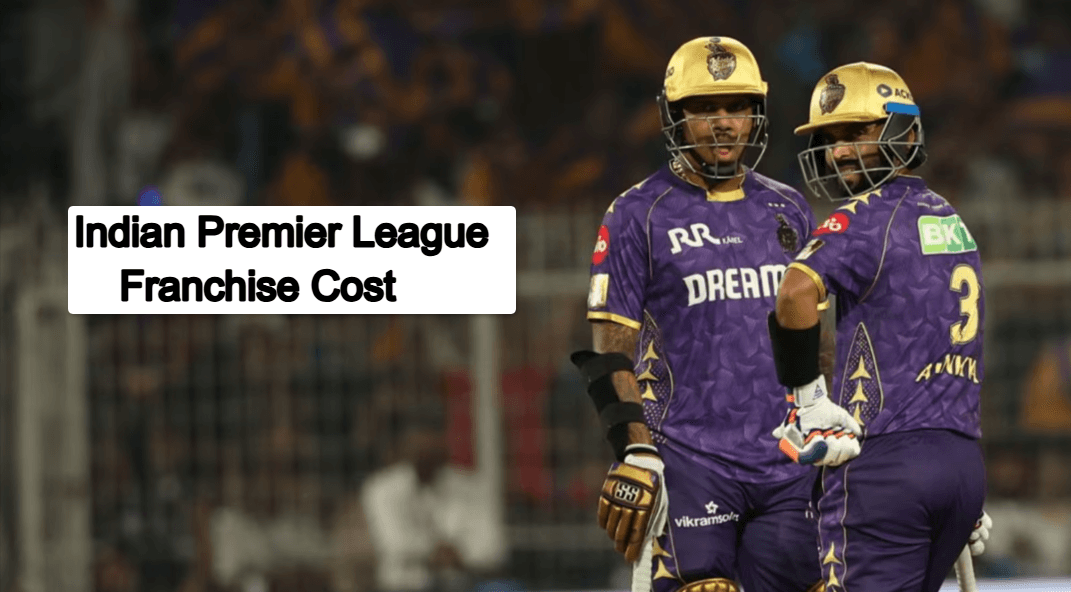
The Indian Premier League (IPL) is more than just the cricket event itself. It’s an entire business and economic ecosystem. For those who are considering entering sports-related franchising, owning or co-owning the IPL franchise is usually viewed as the pinnacle of the game. In this blog post, I will walk you through the franchise cost, the model, return on investment (ROI) expectations, the eligibility/criteria, and steps to apply (or participate) in owning an IPL franchise. I’ll mix the official data with insights from industry experts to give you a more realistic perspective.
Understanding the Model: What Does Owning an IPL Franchise Mean?
A IPL franchise is when you acquire the rights (often through auction) to run an IPL team Indian Premier League under licensing from the Board of Control for Cricket in India (BCCI). Franchise owners are accountable for team management branding players, sponsorships for players logistics marketing, stadium and hospitality (either directly or through partners) and receive revenue through central pool (broadcast rights league sponsorships, broadcast rights) and local revenue (ticketing and hospitality, merchandise etc.). In the break-down: “central revenue pool + sponsorship + merchandise sales and ticket sales plus regional business models” are essential.
It is important to understand that this does not not an ordinary “franchise” which is paid the small amount and operate under a name that is commonly used in retail. This is a massive capital investment company-level ownership with high risk and high reward.
Franchise Cost & What the Investments Look Like
Entry / Ownership Cost
- In the recent IPL expansion, the new teams were greeted with massive entry costs. For instance: The expansion franchises for 2021 – Lucknow Super Giants reportedly paid the sum of 7,090 crore.
- According to reports of the female’s IPL franchise auction base cost was fixed as 400 crore and the anticipated final bids between between Rs1,000 and 1,500 crore or greater.
- “Franchise Cost “franchise cost” thus is not an insignificant one-time payment, but an investment of immense magnitude, usually with multi-crore bids and multi-year payments. The economy requires serious money.
Annual Running Costs
- Beyond the initial cost, there are ongoing operating costs such as player salaries (which are astronomical) coaches and personnel as well as accommodation, travel and venue or stadium related costs, logistics, and brand marketing. A report states that “cost per season can increase to between Rs150 and 200 crore for an established franchise.”
- Additionally, franchises must have to pay a part of the profits back to BCCI: e.g., through the payment of a “franchise fees” or even a revenue share. One piece of economics explains that franchises must contribute a minimum of 20 percent of their revenues towards the BCCI.
Summary What can we expect from HTML0?
- The cost of owning the IPL franchise the cost of entry is from hundreds of thousands of dollars.
- For proper operation: annual expenses in hundreds to tens of millions.
- Returns are contingent on huge profits (broadcast and merchandise, sponsorships,) and a strong brand’s value.
ROI: What Can You Expect and What Influences It?
Since the investment is huge because of the size, return on investment (return upon investment) in the IPL franchise scenario is contingent on a variety of moving components:
Revenue streams
- Central revenue (from broadcast and media rights) According to an article, IPL Media rights from 2023 to 2027 were purchased at a price of Rs48,390 crore. Franchises get a portion (approx 45 percent) of this.
- Sponsorships and merchandising – Major sponsors pay huge sums to franchises, brand-name merchandise sales, hospitality revenue from matches.
- Tickets sales and local business activations revenue from home matches and stadium hospitality, in-venue activations involvement of the fans.
Costs & Risks
- High player commitments to pay (one article that says player compensation consumes 40% of franchise revenue).
- Logistics and operational costs (travel training matches, travel).
- The fact that the value of brands is enormous, but it is also a matter of competition. the revenue varies according to the season the team’s performance, the place of operation, and participation of fans.
Estimating Payback
Imagine you are investing a significant amount (entry plus operating costs). If your company can create a solid brand, secure significant sponsorships, increase the revenue from fans and stadiums and generate positive returns over the course of several years. If costs rise and the revenue is low (or the market is less favorable market) it could take several years.
Factors that influence the HTML0
- The strength of the brand and the fan base for the brand.
- Market size and the local commercial ecosystem (metros in comparison to small cities).
- Performance and team visibility (winning attracted the attention of sponsors).
- Infrastructure for stadiums and venues, as well as the potential to profit from match-days.
- Business models that are ancillary (merchandise licensing and online engagement).
- Control of costs (especially logistical and salary).
The bottom line is: Owning an IPL franchise can be very profitable, but it is also high-risk and capital-intensive. It’s not an investment for a small-scale business but a strategic, long-term enterprise on a massive scale.
Eligibility Criteria & What’s Needed (for Potential Buyers)
If you’re thinking of the possibility of bidding on the purchase of an IPL franchise (or purchasing an existing stake) here are a few of the more common qualifications and requirements:
Financial capacity
- You will need to demonstrate your ability to pay the entry cost (which could be hundreds or even thousands of dollars) but also operating costs.
- It is essential to have a sound balance sheet or have access to corporate capital or investment funds.
Corporate structure and governance
- Typically, the bidder has to establish an entity as a corporation (in India) as per BCCI guidelines.
- Audited and clean finances, transparency.
- Mechanisms for governance (board, audit and compliance) should have been in place.
Market capacity and plan
- A viable business plan to determine which franchises will be run (team marketing, team engagement commercial partnership).
- The venue arrangement of your city (often an essential operational need).
- The ability to interact with media, sponsors Local ecosystem.
Conformity to the rules of the league
- Compliance with bidding processes (for brand new franchisees) through the BCCI’s auction or tender.
- Engagements to operations, performance team composition, players participation as per the rules of the league.
- Revenue-sharing agreements, as well as the compliance in line with standards of the industry (fair game licensing, fair play).
Reputation and long-term commitment
- Ownership with a long-term perspective (sports franchises are usually multi-decade projects).
- Capability to sustain through the periods of low production and to create brand recognition.
If you meet the requirements above requirements, you could be eligible to bid for or purchase the IPL franchise stake however, the cost of entry remains the principal obstacle.
Steps to Apply / Acquire an IPL Franchise
Here’s a step-bystep guide (for prospective new franchises as well as stakeholder participation) taking into consideration the typical scenario:
Step 1: Monitor BCCI / IPL Expansion Announcements
Keep an eye out to the BCCI for any announcements. BCCI for tenders for franchises that are new or auctions. They will include cities, prices and bidding terms, as well as timelines. For instance, announcements for female IPL Base price will be announced.
Step 2: Assemble Financial & Business Team
You will need to form the following team: legal advisers as well as financial experts, sports operations consultants and a marketing team. Make your financials including business plan, investment plan and a stadium/venue plan for your city.
Step 3: Prepare Bid / Submission
Study and download and study the contract. Make your bid, secure the the required bid guarantee, and prepare your commitments to pay (entry cost as well as a payment timetable). Send your bid in the timeframes specified.
Step 4: Win Franchise / Acquire Stake
If the bid is successful then you have to sign the franchise agreement BCCI and league. If you are buying any franchise that is already in place, discuss with the owners of the franchise for stake purchase and receive league approval.
Step 5: Operational Setup
Post award: Set-up team operations (hiring coaches and players) Brand building-up and sponsorship acquisition, venue/stadium operations marketing launch, and fan engagement. Also, compliance with revenue sharing and league rules, auditing.
Step 6: Launch & Season Preparation
Make preparations for the upcoming season Marketing, team launch tickets, merchandise sponsors, venue preparation and staff. Make sure you’re operationally prepared for games.
Step 7: Ongoing Operations & Long-Term Growth
Control each season’s team performance commercial partnerships, growth of fan base and marketing, digital engagement and hospitality. Always analyze costs and revenues, and build lasting brand value.
Why Consider (and Why Be Cautious)
The Opportunity
- IPL in its entirety vast, with a global presence with a strong fan base; having a franchise is a the best asset.
- Potential for revenue from the sponsorships, venues, media operations, and merchandising.
- Value appreciation over time: Franchises have increased in value substantially over the years.
- Strategic synergies can be a great option if you’ve got an interest in business, sports, entertainment, media or hospitality.
The Caution
- The entry cost is very high and only available to big corporations or extremely wealthy individuals.
- Risk: If your team members perform poorly or you fail to take advantage of commercial opportunities, your ROI could be delayed.
- Market dependence: size of the market fan base, size of market and commercial ecosystems are important.
- Cost pressures continue to increase including player salaries and logistics, venue costs cost of regulatory fees.
- The need for a long-term commitment Sports franchises usually require time to grow and build brand loyalty and then fully monetise.
Final Thoughts
If you’re serious about acquiring one of the IPL franchise, then you’re considering thinking of the long-term–we’re talking thousands or hundreds of millions, corporation investment, and a long-term strategic strategy. However, the rewards could be enormous solid brand equity, high revenue worldwide reach, and a seat at table of India’s most popular sporting league.
Consider it an strategy-driven decision not a quick-term business venture. Be sure to do your homework on financial modelling and partnership strategy for the team venue readiness, marketing and fan base. Make sure to check the latest rules from the BCCI/league for specific details on bidding.