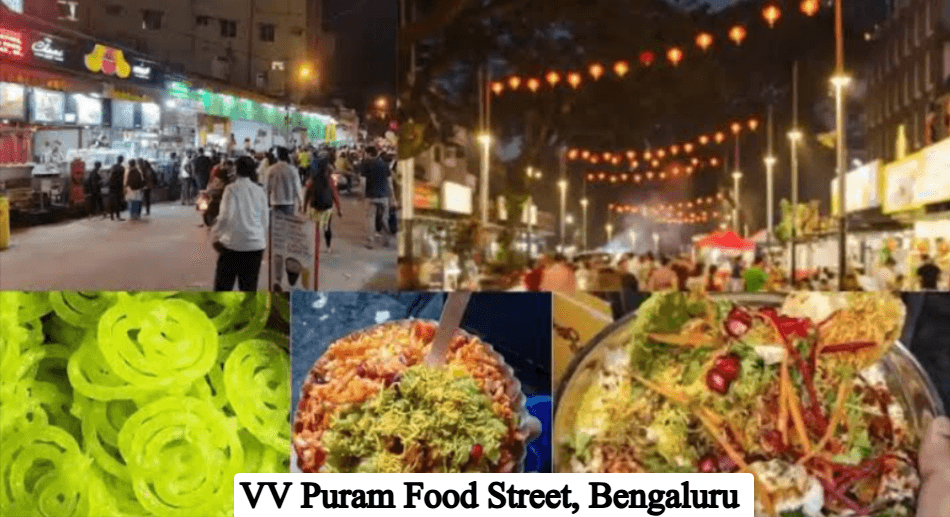
VV Puram Food Street — locally called Thindi Beedi (“Eat Street” in Kannada), and also known as Khau Galli or Shettara Beedi — began around 1967-68, when the first tuck shops appeared on what was then a nondescript road in the Visveswarapura neighbourhood, near the well-known Sajjan Rao Circle landmark. What started with just two or three shops selling homemade South Indian snacks — chaklis, kodubale, congress kadlekai (peanuts, oddly named after a political party), and nippats — gradually transformed the once-sleepy street into a full-blown food destination.
Over roughly five decades, that handful of stalls grew into more than 20 to 30 fixed shops, not counting the many pushcarts that appear each evening. Today, it’s considered to have near-cult status among Bangaloreans and is regarded as one of the city’s defining food experiences, blending traditional Karnataka snacks with North Indian and Chinese dishes.
Location
- Neighbourhood: Visveswarapura (VV Puram), Basavanagudi, Bengaluru
- Landmark: Located near Sajjan Rao Circle, one of the area’s well-known reference points
- Extent: Over 20 food stalls packed into less than 150 metres, making it a compact, walkable street
Connectivity
- By Metro: Get down at National College Metro Station and walk about 10 minutes to reach the street
- By Bus: The nearest bus stop is National College
- By Cab/Auto: Widely available, since the street sits centrally within the city
- On Foot: Once there, the street itself is a short, compact walking stretch — no vehicles needed to explore it
Why Visit VV Puram Food Street?
- Authentic, decades-old street food culture — it’s one of Bengaluru’s oldest and most beloved food streets, not a manufactured tourist attraction
- Everyday food festival atmosphere — the street comes alive after 5-6 PM with pushcarts and shops opening, and stays busy until midnight
- Incredible variety in a tiny footprint — over 20 stalls in under 150 metres means you can sample chaat, corn, rotis, dosas, sweets, and more without much walking
- Extremely affordable — items start from around ₹10, and even a full meal rarely costs more than ₹200
- The annual Avarekai Mela — held every winter (December/January), this festival celebrates avarekai (hyacinth beans), a Karnataka seasonal specialty, with vendors purchasing over 1,000 kg of avarekai directly from farmers on each festival day
- A genuine local institution — it’s woven into the childhood memories of generations of Bangaloreans, not just a spot for visitors
Route
- Most visitors enter the street from Sajjan Rao Circle
- A typical food crawl starts near the circle — early stops often include chaat counters — and moves down the street toward stalls known for akki roti, ragi roti, masala idlis, live dosa counters, Chinese-style street food, and ends with dessert options like nitrogen ice cream or matka kulfi from pushcarts near the far end
- The street is best explored end-to-end on foot, sampling small portions from multiple stalls along the way rather than filling up at just one
Facilities and Amenities
- A dense cluster of stalls and small eateries side by side, some with limited seating
- Limited seating availability overall — the experience leans toward standing/walking and eating rather than sit-down dining, so be prepared to explore on foot
- Live food counters for items like dosas and Chinese dishes
- Juice and beverage stalls (Sree Ganesha fruit juice centre is a noted spot for seasonal fruit juice)
- No formal “facilities” infrastructure (like a managed market complex) — it functions as an organic street market of independent vendors
FAQ
Q: What does “Thindi Beedi” mean?
A: It’s Kannada for “Eat Street” — the local name for VV Puram Food Street.
Q: When did VV Puram Food Street start?
A: Around 1967-68, with the first few tuck shops appearing near Sajjan Rao Circle.
Q: What time does it get busy?
A: The street typically becomes lively after 5-6 PM and stays busy until midnight.
Q: How do I get there by metro?
A: Get down at National College Metro Station and walk about 10 minutes.
Q: Is it vegetarian?
A: Yes, it’s known for serving pure vegetarian street food, including South Indian, North Indian, and Indian-Chinese dishes.
Q: What’s the Avarekai Mela?
A: An annual winter food festival (December/January) celebrating dishes made from avarekai (hyacinth beans), a Karnataka seasonal produce.
Q: How much should I budget?
A: Items start from around ₹10, and even a generous food crawl rarely exceeds ₹200 per person.
Q: Is weekend visiting different from weekdays?
A: Yes — weekends draw noticeably larger crowds, so be prepared for a busier, more crowded experience if visiting then.
Q: What are must-try items?
A: Congress kadlekai, akki roti, ragi roti, masala idli, various chaats, corn preparations, and pani puri are frequently recommended.